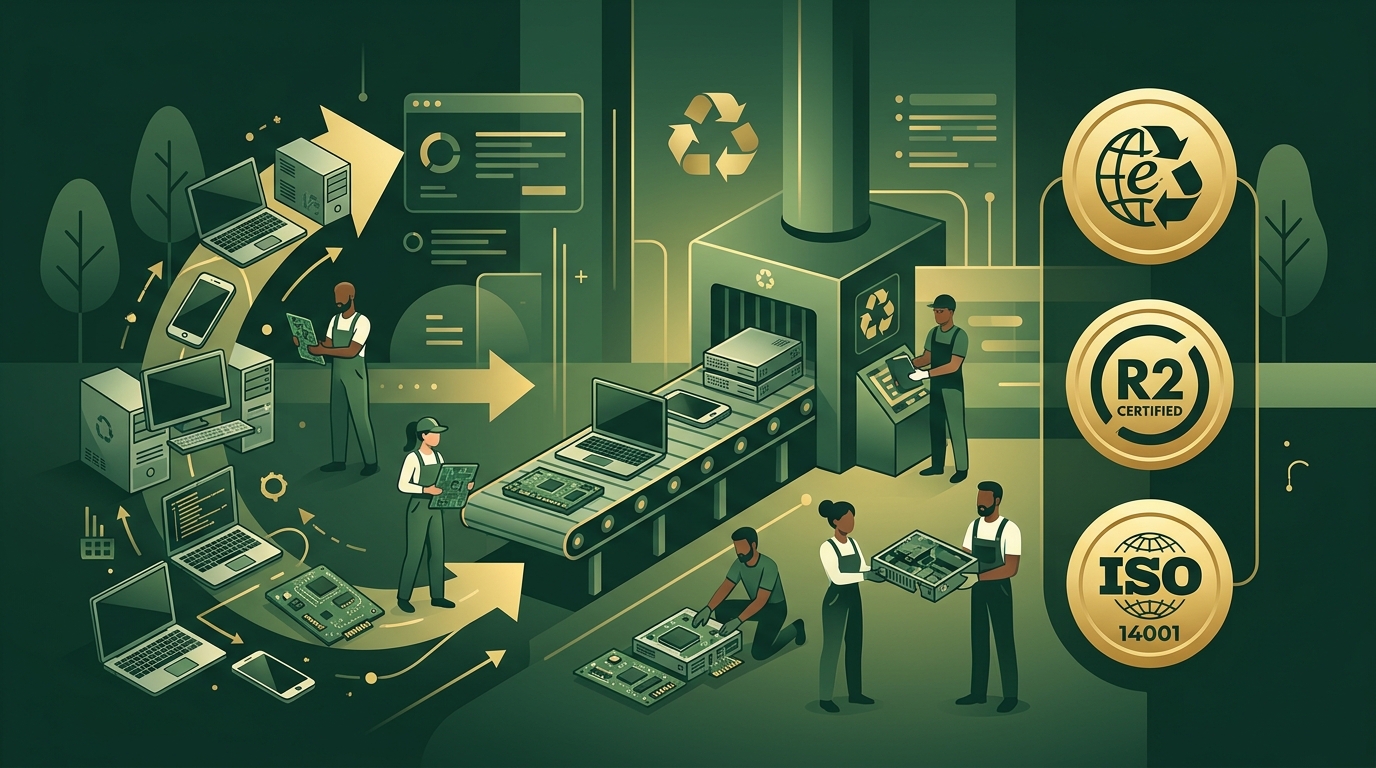
If you operate an IT asset disposition (ITAD) facility in Canada and you're not R2v3 or NAID AAA certified, you're competing against companies that are — and losing. Enterprise clients, government agencies, and regulated industries increasingly mandate these certifications as prerequisites for awarding contracts. Here's what each standard actually requires and how to prepare.
R2v3: Responsible Recycling Version 3
R2v3, governed by Sustainable Electronics Recycling International (SERI), is the premier standard for electronics recyclers. It covers the entire lifecycle of electronic equipment from intake through processing, material recovery, and downstream disposition.
Key Requirements
- Downstream due diligence: You must qualify every downstream vendor that receives materials from your facility. This includes on-site audits, insurance verification, and regulatory compliance checks. You can't simply ship materials to a broker and call it done.
- Focus material management: R2v3 identifies specific "focus materials" (batteries, CRTs, mercury-containing devices, circuit boards) that require documented handling procedures, storage limits, and tracked disposition.
- Environmental Health & Safety (EHS): Comprehensive worker safety programs including PPE requirements, air quality monitoring, hazardous material handling, and emergency response procedures.
- Data sanitization: All data-bearing devices must be sanitized using methods aligned to NIST SP 800-88r1 (Clear, Purge, or Destroy). You need documented procedures, verification testing, and certificates of destruction.
- Legal compliance: Demonstrated compliance with all applicable federal, provincial, and municipal environmental, health, safety, and transportation regulations.
- Closure plan: A documented plan for responsibly managing all materials if your facility closes — auditors want to see that environmental obligations survive the business.
NAID AAA: The Gold Standard for Data Destruction
NAID AAA certification, governed by i-SIGMA, is specifically focused on secure data destruction. While R2v3 covers the broad ITAD operation, NAID AAA goes deep on the chain-of-custody and destruction controls.
Key Requirements
- Unannounced audits: Unlike most certifications where you schedule your audit, NAID AAA auditors can show up unannounced. Your facility must be audit-ready at all times.
- Employee screening: All employees with access to client media must undergo seven-year criminal background checks and drug screening. This applies to drivers, sorters, and shredder operators — not just management.
- Chain-of-custody documentation: Track every piece of client media from the moment it's picked up to the moment it's destroyed. GPS-tracked vehicles, locked containers, facility access controls, and destruction verification.
- NIST 800-88r1 compliance: Data sanitization methods must align with NIST guidelines. For physical destruction, particle sizes must meet specific thresholds. For software-based sanitization, verification procedures must confirm successful erasure.
- Facility security: CCTV coverage of processing areas, restricted access zones, visitor management, and alarm systems. The physical security requirements are comparable to what you'd see in a financial institution.
- Insurance requirements: Specific insurance coverage levels for errors and omissions, commercial general liability, and data breach liability.
How the Two Standards Work Together
R2v3 and NAID AAA are complementary. R2v3 covers the environmental and recycling side of your operation — material tracking, worker safety, downstream vendor management. NAID AAA covers the data security side — chain-of-custody, destruction verification, employee vetting. Most enterprise clients want to see both, because they need assurance that their retired equipment is both securely destroyed and responsibly recycled.
Preparing for Certification
The typical certification timeline for a Canadian ITAD facility is 4-8 months, depending on the current state of your documentation and operations. The most common gaps we see:
- Downstream vendor documentation: Facilities often have vendor relationships but lack the formal qualification records auditors require.
- Data sanitization verification: Performing sanitization is one thing; documenting verification of successful sanitization is another.
- Employee screening records: Background checks need to be current and comprehensive. Expired or incomplete checks are a common nonconformity.
- EHS programs: Worker safety documentation that exists but isn't actively maintained or practiced.